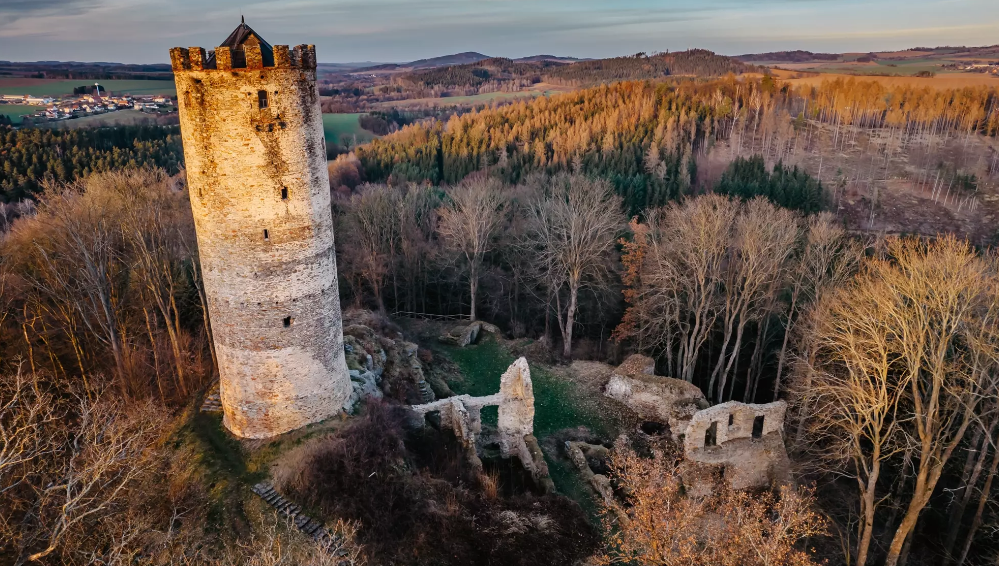
Perched majestically on a rocky promontory above the serene Blanice River valley, Šelmberk Castle offers a fascinating glimpse into the medieval past of the South Bohemian region. Just a short journey from Mladá Vožice, this site has evolved from a formidable 14th-century stronghold into a vibrant hub for historical living. Whether you are a history enthusiast or a family looking for an immersive day out, Šelmberk provides a perfect blend of panoramic views and hands-on cultural experiences.
A Journey Through Time at Šelmberk Castle
First documented in 1318, Šelmberk Castle was established by the noble lords of Šelmberk. While the original Gothic structure underwent significant Renaissance-era renovations, the castle fell into decline following the Thirty Years’ War. By the 18th century, local villagers repurposed much of the masonry, leaving behind the picturesque ruins we see today.
The Iconic Bergfrit Tower
The centerpiece of the ruins is the 26-meter-high cylindrical tower, known as a bergfrit. Historically designed as a last-resort refuge for defenders, it was once accessible only via a removable bridge. Today, the tower has been meticulously preserved and serves as an observation deck, rewarding visitors with breathtaking views of the surrounding Toulava landscape.
The Historical and Craft Education Center
Beyond its architectural beauty, Šelmberk Castle serves as a living museum. As part of the Historical and Craft Education Center, the site breathes life back into ancient trades. Throughout the year, the grounds host workshops that allow visitors to step back in time and appreciate the skill required by our ancestors.
Explore Traditional Crafts
Visitors can wander through a variety of thematic installations that showcase medieval ingenuity. Highlights include:
- Pottery Workshop and Kiln: Discover the art of clay shaping and traditional firing techniques.
- Textile Arts: Visit the weaving workshop to learn about historical fabric production.
- Artisan Spaces: Explore the carpentry and saddlery workshops that once supported the castle’s daily operations.
- The Bath House and Herb Garden: Experience the primitive yet effective health and hygiene practices of the era.
Visitor Information for May 2026
Planning your visit to this historical gem is straightforward. The castle ruins are freely accessible, though entry to the tower is managed during official operating hours.
- Opening Season: April 1st to October 31st
- Opening Days: Saturdays and Sundays, 10:00 – 17:00
- 가입: 20 CZK (standard), 10 CZK (reduced)
- 위치: Běleč 3, 391 43 Běleč
- Coordinates: 49.549869, 14.826475
- 연락하다: +420 603 520 973
Plan Your Trip to Toulava
A trip to Šelmberk Castle is an ideal half-day excursion, perfect for combining with a nature walk through the beautiful Běleč surroundings. The combination of the panoramic lookout and the educational craft workshops ensures that visitors of all ages leave with a deeper understanding of Czech heritage.
If you find yourself in the South Bohemian region, do not miss the chance to climb the historic tower and witness the valley from the perspective of a medieval lord. We encourage you to check the official schedule before your arrival and prepare for an afternoon of historical discovery. Pack your camera, bring your curiosity, and head to Šelmberk Castle for your next weekend adventure!
자주 묻는 질문
Where is Šelmberk Castle located?
Šelmberk Castle is situated on a hill near Mladá Vožice in the South Bohemian region of the Czech Republic.
Can I climb the tower at Šelmberk Castle?
Yes, the main 26-meter-high cylindrical tower (bergfrit) has been converted into an observation tower offering views of the surrounding area.
What is the Historical and Craft Education Center?
It is a center located at the castle featuring various workshops like pottery, weaving, carpentry, and a herb garden to showcase historical crafts.
Are the ruins of Šelmberk Castle free to enter?
The castle ruins are freely accessible, though the main tower is only open during official operating hours.
When was Šelmberk Castle built?
The castle is first documented in 1318 and was built by the lords of Šelmberk.